The New York Times published a rundown today of the top ten states in installed solar power capacity. That California was number one was no surprise, but the other nine were interesting to see. Here's the full list:
1. California: 47 percent with 971 megawatts
2. New Jersey: 14 percent with 293 MW
3. Colorado: 5 percent with 108 MW
4. Arizona: 5 percent with 101 MW
5. Nevada: 5 percent with 97 MW
6. Florida: 4 percent with 73 MW
7. New York: 3 percent with 54 MW
8. Pennsylvania: 3 percent with 54 MW
9. New Mexico: 2 percent with 45 MW
10. North Carolina: 2 percent with 42 MW
New Jersey has made its way to second place with some major small-scale solar initiatives. Rooftops and utility poles across the state have gotten the solar treatment and all that distributed solar has added up to a nice chunk of MW.
Pennsylvania and North Carolina were interesting additions, as solar programs in other areas, like the Southwest, have gotten a bit more attention. But it is worth noting that there is over a 900 MW gap between California and North Carolina. California is really at the level I wish all states would strive for, and while 42 MW is nothing to sneeze at, that type of number making our top ten shows we have a much longer way to go overall.
via NY Times
Friday, May 6, 2011

Thursday, May 5, 2011
Solergy Introduces Building-Integrated Concentrated PV Product
Solergy Inc., the developer of a cogeneration concentrated PV (CPV) solar energy system, has introduced a building-integrated CPV (BICPV) product for building rooftops, greenhouses and agriculture applications.
The Solergy BICPV solution transforms a passive structural element into an integrated energy appliance that generates electricity and heat, the company explains. The product is compatible with greenhouses and skylights and features a rapid, non-destructive installation and integration.
The technology announcement follows the signing of a memorandum of understanding between Solergy and Azienda Agricola Ciccolella, a producer of olive oil and cut roses in the Puglia region of Italy.
Solergy will integrate a 105 kW Cogen BICPV system in Ciccolella's greenhouses used to cultivate roses. In addition, the two companies will collaborate to develop the Cogen solar market for greenhouses and orchards throughout the Puglia region, representing hundreds of megawatts, according to Solergy.
To learn more: click here.
Source: Solergy
The Solergy BICPV solution transforms a passive structural element into an integrated energy appliance that generates electricity and heat, the company explains. The product is compatible with greenhouses and skylights and features a rapid, non-destructive installation and integration.
The technology announcement follows the signing of a memorandum of understanding between Solergy and Azienda Agricola Ciccolella, a producer of olive oil and cut roses in the Puglia region of Italy.
Solergy will integrate a 105 kW Cogen BICPV system in Ciccolella's greenhouses used to cultivate roses. In addition, the two companies will collaborate to develop the Cogen solar market for greenhouses and orchards throughout the Puglia region, representing hundreds of megawatts, according to Solergy.
To learn more: click here.
Source: Solergy
Solar Technology Continues To Dominate Investment In Q1
U.S. venture capital (VC) investment in cleantech companies increased by 54% to $1.14 billion in the first quarter of this year (Q1'11), from $743.3 million in the first quarter of 2010 (Q1'10).
This increase occurred despite a 13% decrease in deals year-on-year from 79 to 69, according to an Ernst & Young LLP analysis based on data from Dow Jones VentureSource. The top 10 deals in Q1'11 totaled $683.1 million, 60% of the total raised for the quarter, and two deals accounted for 18% of the total dollars raised.
"The U.S. cleantech market experienced continuing momentum - both from a venture capital perspective and among the larger investment community," says Jay Spencer, Ernst & Young LLP's Americas cleantech director. "The second generation of solar companies and larger, later-stage rounds dominated VC investor interest in Q1."
The energy/electricity generation segment, led by strong solar investments, raised $450.3 million through 16 deals in Q1'11. The solar sub-segment accounted for 32% of the total dollars raised for the quarter with $362.7 million, a 162% gain from Q1'10.
Specifically, MiaSole, a manufacturer of copper indium gallium selenide thin-film photovoltaic solar panels, was the largest deal of the quarter. The company raised $106 million in a later-stage round of financing, 24% of total dollars in Q1'11. Alta Devices, a northern California company that focuses on improving the production economics of high-efficiency solar PV applications, had the fourth largest deal of the quarter, with $72 million third-round financing.
Companies generating revenue raised $596.4 million, 52% of the total dollars invested in Q1'11, up from just 34% in the same period last year, the report adds. Later-stage rounds accounted for 28 deals and $721.6 million, representing 67% of the total quarterly investment compared to 57% in Q1'10. However, first-round investment also increased by 77% to $146.1 million compared to $82.7 million in Q1'10.
In Q1'11, California accounted for 56% of the total dollars funded, with $637.2 million, up 41% year-on-year. Northern California attracted 79% of dollars raised throughout California. This quarter was also strong for investment in the Southeast and the New England regions, Ernst & Young says.
Companies in the Southeast garnered $150.2 million, and New England-area companies attracted $174.23 million, a 193% increase compared to Q1'10.
The focus on solar was also reflected in corporate investment in Q1'11, the report says. New corporate engagements in this segment included California-based Innovalight and Taiwan-based Motech's partnership to develop solar cells using silicon ink. Additionally, Citigroup and SolarCity set up a $40 million fund for solar power projects.
In terms of other capital market activity, 15 U.S. mergers and acquisitions cleantech deals, with a value of $206 million, were completed in Q1'11, according to IHS Herold. The largest deal was the acquisition of a 70% stake in Solar Power Inc. by LDK Solar Co. Ltd. for $29 million.
This increase occurred despite a 13% decrease in deals year-on-year from 79 to 69, according to an Ernst & Young LLP analysis based on data from Dow Jones VentureSource. The top 10 deals in Q1'11 totaled $683.1 million, 60% of the total raised for the quarter, and two deals accounted for 18% of the total dollars raised.
"The U.S. cleantech market experienced continuing momentum - both from a venture capital perspective and among the larger investment community," says Jay Spencer, Ernst & Young LLP's Americas cleantech director. "The second generation of solar companies and larger, later-stage rounds dominated VC investor interest in Q1."
The energy/electricity generation segment, led by strong solar investments, raised $450.3 million through 16 deals in Q1'11. The solar sub-segment accounted for 32% of the total dollars raised for the quarter with $362.7 million, a 162% gain from Q1'10.
Specifically, MiaSole, a manufacturer of copper indium gallium selenide thin-film photovoltaic solar panels, was the largest deal of the quarter. The company raised $106 million in a later-stage round of financing, 24% of total dollars in Q1'11. Alta Devices, a northern California company that focuses on improving the production economics of high-efficiency solar PV applications, had the fourth largest deal of the quarter, with $72 million third-round financing.
Companies generating revenue raised $596.4 million, 52% of the total dollars invested in Q1'11, up from just 34% in the same period last year, the report adds. Later-stage rounds accounted for 28 deals and $721.6 million, representing 67% of the total quarterly investment compared to 57% in Q1'10. However, first-round investment also increased by 77% to $146.1 million compared to $82.7 million in Q1'10.
In Q1'11, California accounted for 56% of the total dollars funded, with $637.2 million, up 41% year-on-year. Northern California attracted 79% of dollars raised throughout California. This quarter was also strong for investment in the Southeast and the New England regions, Ernst & Young says.
Companies in the Southeast garnered $150.2 million, and New England-area companies attracted $174.23 million, a 193% increase compared to Q1'10.
The focus on solar was also reflected in corporate investment in Q1'11, the report says. New corporate engagements in this segment included California-based Innovalight and Taiwan-based Motech's partnership to develop solar cells using silicon ink. Additionally, Citigroup and SolarCity set up a $40 million fund for solar power projects.
In terms of other capital market activity, 15 U.S. mergers and acquisitions cleantech deals, with a value of $206 million, were completed in Q1'11, according to IHS Herold. The largest deal was the acquisition of a 70% stake in Solar Power Inc. by LDK Solar Co. Ltd. for $29 million.
Source: Solar Industry
Wednesday, May 4, 2011
Small Scale Solar Thermoelectric Device Prototype Developed
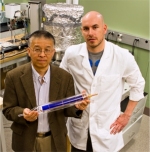
A collaborative research team from the Massachusetts Institute of Technology (MIT) and Boston College have developed a small-scale thermoelectric solar device that uses flat-panel technology - much like conventional silicon photovoltaic solar panels - to harness the sun's heat and produce power up to eight times more efficiently than other devices based on solar thermoelectric technology.
The beauty of the device, according to MIT Professor in Power Engineering, Gang Chen, lies in its simplicity. Like a photovoltaic module based system, it has no moving parts. The device consists of a thermoelectric generator placed inside a vacuum chamber made of glass, covered with a black plate of copper that absorbs sunlight but does not re-radiate it as heat. The other side of the generator is in contact with ambient temperatures. Even when not in direct sunlight, the generator is capable of harnessing a temperature difference of 200 degrees Celsius between the interior and exterior of the system to generate electricity.
The concept "is very radical," Chen says, and because the MIT device requires much less expensive materials to manufacture than traditional solar panels, the cost vs. energy output could become a superior clean energy choice in the future once the technology is properly developed.
By installing small-scale solar thermoelectric devices onto existing solar hot water systems, households could also produce electricity and further reduce greenhouse gas emissions.
Li Shi, associate professor of mechanical engineering at the University of Texas at Austin, says the thermoelectric approach to solar power is "very novel, simple, and easy for low-cost implementation." The efficiency level they have demonstrated so far, at 4.6 percent, is "already quite impressive," he says.
Source: Energy Matters
Bill Gates: We Need More Energy Research To Solve Our Problems
Microsoft founder Bill Gates on Tuesday warned rich nations of the limitations of "cute" energy-efficient technologies, like individual solar panels, and advised spending more money on R&D to make energy cheaper for developing countries.
During a keynote on energy innovation at the Wired Business Conference 2011 in New York City, Gates said the only pure efficiency that comes from using energy-efficient technologies like LED lights, solar panels, and heating-efficient buildings, is economic.
"Can we, by increasing efficiency [technologies], deal with our climate problem?" he asked. "The answer there is basically no, because the climate problem requires more than 90 percent reduction of C02 emitted, and no amount of efficiency improvement is enough," he said.
Every year developed countries improve energy efficiency, but it is almost entirely offset by the voracious energy consumption of developing countries, he added.
"With the CO2 problem, even if the rich world did very erratic things it doesn't come anywhere near to solving the problem. You have to help the rest of the world get energy at a very reasonable price to get anywhere," he said. Instead of spending money on subsidizing old energy technologies, Gates said the role of the rich world is to talk about long-term problems and fund the R&D to find solutions. But there's a Catch-22 here, given that most Americans don't grow their own food or have any first-hand knowledge of how climate change affects things like food production.
"The problem is that rich countries can afford to overpay for things. We can afford to overpay for medicine, energy, we can rig our food prices," he said. "Our politicians aren't told that we're suffering because we're overpaying for things."
Gates claimed that over 90 percent of energy subsidies actually went into deploying old technology instead of R&D. "You can buy as much old technology as you want, but you won't get breakthroughs which only come out of basic research."
When it comes to energy sources, Gates' preferences are well-known. In recent years he has invested hundreds of millions in nuclear energy start-ups, like the Bellevue, Washington-based nuclear reactor plant TerraPower, which has built a prototype for a nuclear reactor that can supposedly run for 50 years without refueling.
"The good news about nuclear is that there's hardly been any innovation, so the room to do things differently has been quite dramatic," he said, arguing that the amount of waste generated by nuclear plants is "tiny" compared to coal plants.
What happened in Fukushima was terrible, but preventable with newer technology, he said, noting that the nuclear power plants there were built in the 1960s. "The emergency plants were weak," he said.
During a keynote on energy innovation at the Wired Business Conference 2011 in New York City, Gates said the only pure efficiency that comes from using energy-efficient technologies like LED lights, solar panels, and heating-efficient buildings, is economic.
"Can we, by increasing efficiency [technologies], deal with our climate problem?" he asked. "The answer there is basically no, because the climate problem requires more than 90 percent reduction of C02 emitted, and no amount of efficiency improvement is enough," he said.
Every year developed countries improve energy efficiency, but it is almost entirely offset by the voracious energy consumption of developing countries, he added.
"With the CO2 problem, even if the rich world did very erratic things it doesn't come anywhere near to solving the problem. You have to help the rest of the world get energy at a very reasonable price to get anywhere," he said. Instead of spending money on subsidizing old energy technologies, Gates said the role of the rich world is to talk about long-term problems and fund the R&D to find solutions. But there's a Catch-22 here, given that most Americans don't grow their own food or have any first-hand knowledge of how climate change affects things like food production.
"The problem is that rich countries can afford to overpay for things. We can afford to overpay for medicine, energy, we can rig our food prices," he said. "Our politicians aren't told that we're suffering because we're overpaying for things."
Gates claimed that over 90 percent of energy subsidies actually went into deploying old technology instead of R&D. "You can buy as much old technology as you want, but you won't get breakthroughs which only come out of basic research."
When it comes to energy sources, Gates' preferences are well-known. In recent years he has invested hundreds of millions in nuclear energy start-ups, like the Bellevue, Washington-based nuclear reactor plant TerraPower, which has built a prototype for a nuclear reactor that can supposedly run for 50 years without refueling.
"The good news about nuclear is that there's hardly been any innovation, so the room to do things differently has been quite dramatic," he said, arguing that the amount of waste generated by nuclear plants is "tiny" compared to coal plants.
What happened in Fukushima was terrible, but preventable with newer technology, he said, noting that the nuclear power plants there were built in the 1960s. "The emergency plants were weak," he said.
Monday, May 2, 2011
Ammonix Builds 2 MW Concentrating Solar Project in Tuscon

California-based Amonix Inc., is building a 2 MW concentrating photovoltaic system, at the UA tech park's Solar Zone. Amonix will use flat lenses to focus sunlight on high-efficiency photovoltaic cells, which convert the light to electricity.
The 12-acre system consists of 36 massive solar panels - each about the size of an IMAX movie screen - towering up to about 50 feet off the ground on dual-axis pedestals that track the sun horizontally and vertically. The design enables the light to be concentrated onto high efficiency uPV cells, cutting construction costs, while the tracking system assures maximum light collection.
"This really is cutting-edge technology - there is to my knowledge nothing like it in the country," Amonix CEO Brian Robertson told a crowd of about 100 attendees at Thursday's dedication.
Tucson Electric Power Co. is buying power output from the system under a 20-year power-purchase agreement approved by state regulators.
While concentrating PV systems have been installed elsewhere, Amonix's array is the biggest to use high-efficiency semiconductor cells known as multijunction cells. Multijunction cells, consisting of many layers of semiconductor material, use more of the light spectrum to generate the highest power-conversion efficiencies known. The technology was pioneered by the National Renewable Energy Laboratory and previously used to power satellites.
Amonix, which has been working to commercialize concentrating PV technology since its founding in 1989, has installed smaller systems using multijunction cells in Nevada, where it opened a solar panel plant in North Las Vegas last fall.
The panels used in the Tucson array are "the most efficient, most powerful solar electric generators in the world," Vahan Garboushian, Amonix founder and chairman, said in his dedication remarks.
The concentrator cells have produced energy efficiencies of more than 40 percent in the lab and 27 percent in the field, said Garboushian. By comparison, most production PV panels have an efficiency rating of 20 percent or less, according to the National Renewable Energy Laboratory.
While heat degrades the efficiency of other PV cell media - particularly common crystalline silicon - the Amonix semiconductor cells are designed to maintain most of their efficiency in the high heat generated by concentrated sunlight, Garboushian said.
Garboushian said Amonix is considering Tucson as a site for future company facilities. Meanwhile, the company and TEP continue to plan for a 12-MW concentrating PV system at a rock quarry on South Swan Road, to begin construction this fall.
Source: Arizona Daily Star.
Australia to Invest Big Money in Solar Projects over Next 10 Years
Australian policies to encourage the development of renewable energy projects will drive at least $36 billion of investment by 2020, according to Bloomberg New Energy Finance forecasts.
About $28 billion will be spent to build large utility- scale power projects such as wind farms, while a further $8 billion will be invested by households and businesses in smaller rooftop solar systems, according to a Bloomberg New Energy Finance report issued today.
Australia has set a target of generating 20 percent of its electricity from renewable energy by 2020 and is proceeding with a $1.5 billion funding program to support solar projects. Prime Minister Julia Gillard has said the government wants to set a price on carbon emissions starting in July 2012 in preparation for a trading system to begin as early as 2015.
“Strong levels of investment will continue, thanks to the national targets and the rapidly falling costs of clean energy,” Seb Henbest, who leads Bloomberg New Energy Finance's Sydney-based research team, said in a statement.
BP Plc, AGL Energy Ltd. and CLP Holdings Ltd.'s unit TRUenergy Holdings Pty are vying for government solar grants to develop projects using photovoltaic panels to turn sunlight into power, while a joint proposal from Suntech Power Holdings Co. and Infigen Energy is another of the shortlisted ventures.
While renewable energy investment in Australia is expected to fall to $3 billion in 2011 from more than $4 billion in 2010, it will rise to $4 billion in 2012 and stay higher than that for most of the decade, Bloomberg New Energy Finance said.
The projected investment is equal to the $36 billion needed to build Australia's national broadband network, intended to extend fiber-optic cable to 93 per cent of the country's homes, it said.
Source: Bloomberg
About $28 billion will be spent to build large utility- scale power projects such as wind farms, while a further $8 billion will be invested by households and businesses in smaller rooftop solar systems, according to a Bloomberg New Energy Finance report issued today.
Australia has set a target of generating 20 percent of its electricity from renewable energy by 2020 and is proceeding with a $1.5 billion funding program to support solar projects. Prime Minister Julia Gillard has said the government wants to set a price on carbon emissions starting in July 2012 in preparation for a trading system to begin as early as 2015.
“Strong levels of investment will continue, thanks to the national targets and the rapidly falling costs of clean energy,” Seb Henbest, who leads Bloomberg New Energy Finance's Sydney-based research team, said in a statement.
BP Plc, AGL Energy Ltd. and CLP Holdings Ltd.'s unit TRUenergy Holdings Pty are vying for government solar grants to develop projects using photovoltaic panels to turn sunlight into power, while a joint proposal from Suntech Power Holdings Co. and Infigen Energy is another of the shortlisted ventures.
While renewable energy investment in Australia is expected to fall to $3 billion in 2011 from more than $4 billion in 2010, it will rise to $4 billion in 2012 and stay higher than that for most of the decade, Bloomberg New Energy Finance said.
The projected investment is equal to the $36 billion needed to build Australia's national broadband network, intended to extend fiber-optic cable to 93 per cent of the country's homes, it said.
Source: Bloomberg
Subscribe to:
Posts (Atom)